
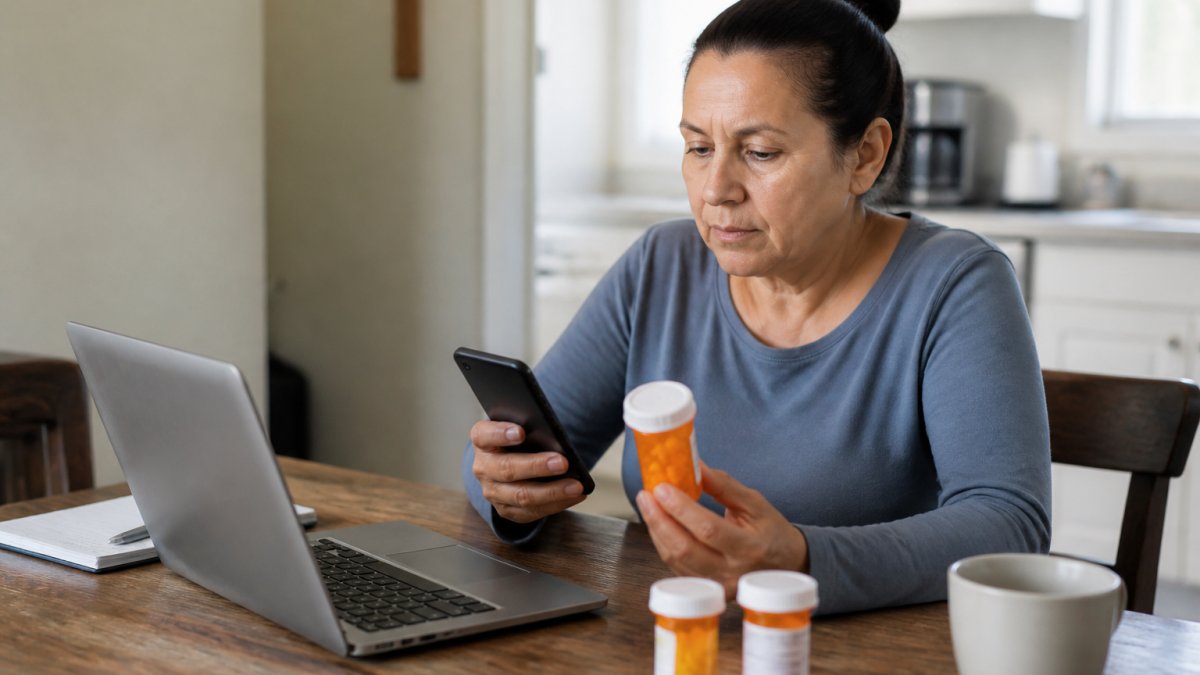
 how-to
How to Get Prescription Refills Online: A Step-by-Step Guide
Last Updated: October 22, 2026
Quick Summary
You get prescription refills online by logging into a secure patient portal or joining a short video visit with a licensed clinician who reviews your medication, dose, and history before renewing it. The visit usually takes 10 to 20 minutes, and the order is sent to your pharmacy during or right after the call.
- A prescription refill renews an existing order; it is not a new prescription.
- Request your refill three to five days before you run out to avoid a gap.
- Confirm your pharmacy name and address in the portal before the visit.
- Check whether your drug is in stock and needs prior authorization before booking.
- Choose in-person care when symptoms are new, severe, or need a physical exam.
Table of Contents
- How to Get Prescription Refills Online: The Basics
- Online Doctor Prescription Refill: What to Expect From the Visit
- Step-by-Step: Your Medication Refill Appointment
- Using a Prescription Refill App: Features That Matter
- How Long Does an Online Prescription Refill Take?
- Privacy, Security, and Insurance for Online Refills
- When to Choose In-Person Care Instead
- Conclusion
- Frequently Asked Questions
How to Get Prescription Refills Online: The Basics
Getting prescription refills online means using a secure patient portal or telehealth visit to ask a licensed clinician to renew a medication you already take.
That distinction matters. A prescription refill is a renewal of an existing order, not a new prescription.
Below, we break down exactly how the process works, what it costs you in time, and when you should close the laptop and book an in-person visit instead.
What Online Prescription Refills Can and Cannot Do
Online refill services handle routine renewals well. They cannot do everything.
What they can do:
- Renew long-term medications for stable conditions
- Adjust a dose after a conversation with a clinician
- Send a new order to your preferred pharmacy
What they cannot do:
- Prescribe controlled substances in most cases
- Diagnose a new condition from scratch
- Replace emergency care
The rules on controlled substances come from federal and state law, not from any one provider. If you take a medication in that category, check the DEA rules on controlled substances and telemedicine before you assume an online visit will work.
Online Doctor Prescription Refill: What to Expect From the Visit
An online doctor prescription refill visit is a short consultation, usually by video, where a clinician reviews your medical history and decides whether to renew the medication. Expect questions, not a checkout screen.
Here is what the visit typically covers:
- Identity check. You confirm who you are, often with a photo ID and date of birth.
- Medication review. You name the drug, the dose, and how often you take it.
- Symptom check. The clinician asks how your condition is managed.
- History review. They check your electronic health record for allergies and past reactions.
- Decision. The clinician renews, adjusts, or declines, and explains why.
What most guides miss is step five. A decline is not a rejection of you. It often means the medication needs a lab check or an in-person exam first.
Step-by-Step: Your Medication Refill Appointment
A medication refill appointment takes about 15 to 20 minutes from login to pharmacy notification, assuming your information is current. Here is the sequence we recommend, in order.
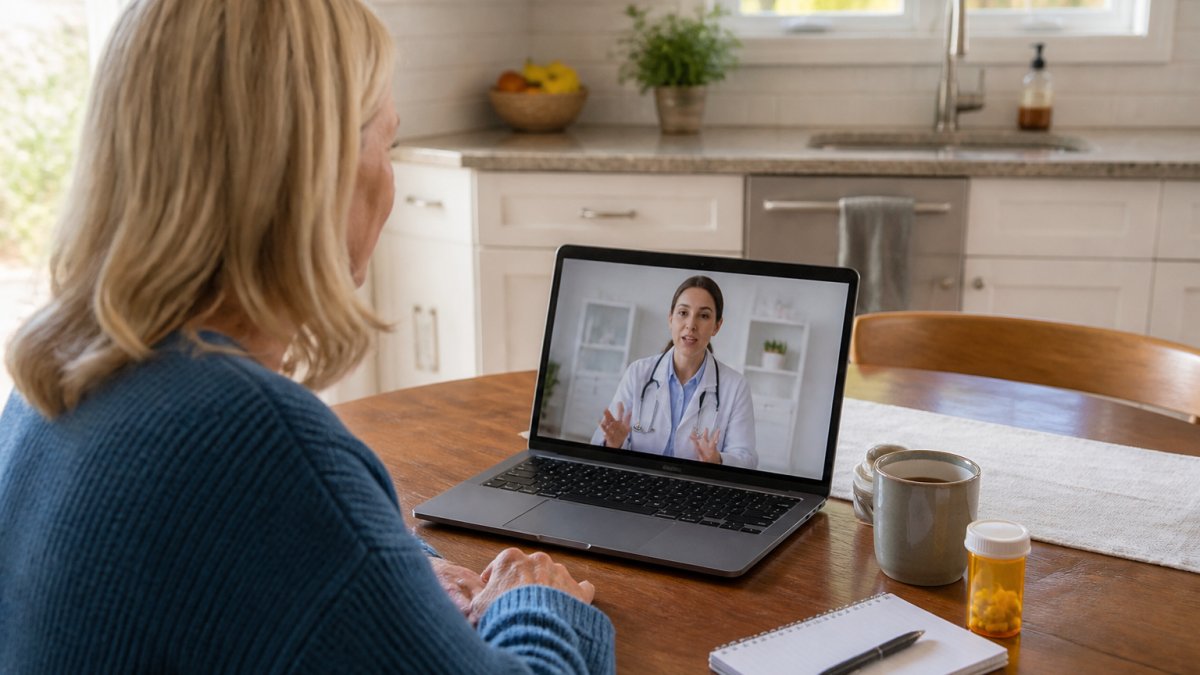
- Log in to the patient portal. Use your own login credentials. Do not share them.
- Update your pharmacy. Confirm the pharmacy name and address before the visit, not after.
- List your medications. Include the dose and how often you take each one.
- Note your questions. Write down side effects or changes you want to discuss.
- Test your connection. Check your camera, microphone, and internet before the call.
- Join the video consultation. Have your pill bottles within reach.
- Answer the clinician's questions. Be honest about missed doses.
- Confirm the pharmacy. The order goes out during or right after the call.
- Watch for the confirmation. Most pharmacies send a text when the order arrives.
Using a Prescription Refill App: Features That Matter
A prescription refill app is only as good as three things: secure login, a clear medication list, and a direct line to a clinician. Everything else is decoration. When you compare apps, score them on those three first.
| Feature | Why It Matters | What to Check |
|---|---|---|
| Secure connection | Protects your health data | Look for encryption and HIPAA compliance |
| Medication list | Speeds up the review | Can you edit doses yourself? |
| Clinician access | Solves problems fast | Is there a real person to message? |
| Pharmacy sync | Prevents wrong-pharmacy errors | Does it store your preferred pharmacy? |
| Refill status | Removes guesswork | Can you see when the order was sent? |
The user interface should be simple enough to use while you are half-awake. If you cannot find the refill button in under a minute, that is a design problem, not a you problem.
Privacy deserves its own note. Federal rules under HHS guidance on HIPAA and telehealth govern how your data must be protected. Ask any provider how they store records and who can see them.
How Long Does an Online Prescription Refill Take?
How long does an online prescription refill take? The visit itself usually runs 10 to 20 minutes. The pharmacy side is the variable, and it is where most delays happen.
The Realistic Timeline
- Scheduling: same-day appointments are common but not guaranteed; evening and weekend slots fill first.
- The visit: 10 to 20 minutes from login to sign-off.
- Clinician review and send: usually same day, often within an hour of the call.
What Actually Drives the Delay
Four factors control the pharmacy clock, and you can check most of them before you book:
- Stock at your specific pharmacy. A chain location and an independent pharmacy can have very different inventory. Call the pharmacy and ask whether the exact drug and dose are in stock before the visit.
- Prior authorization. If your plan requires it, the pharmacy cannot fill the order until the prescriber submits paperwork and the insurer approves. That can add one to several business days. Ask your insurer whether the drug needs it.
- Pharmacy type. Retail chains often process routine renewals within a few hours. Mail-order and specialty pharmacies run on longer cycles, sometimes a week or more, so plan ahead if you use one.
- Controlled substances. These carry extra verification steps and, in many cases, cannot be sent electronically the same way as other prescriptions. Expect additional time and confirm the rules with the pharmacy.
How to Avoid a Gap in Your Medication
Request the refill a few days before you run out, not the morning of your last pill. A buffer of three to five days absorbs pharmacy delays without a gap. If you are already down to your last dose, call the pharmacy directly and ask about stock before you book the visit, that one call prevents most same-day surprises.
Privacy, Security, and Insurance for Online Refills
Insurance is where most online refill attempts quietly fall apart. The visit is quick, but the bill is not always what people expect. The fix is to verify coverage before you book, not after the invoice arrives.
How to Verify Insurance Coverage Before You Book
Start with your plan's member services number on the back of your insurance card. Ask three specific questions, and write down the answers and the representative's name:
- Is this provider in network for telehealth? In-network status for in-person care does not automatically carry over to a virtual visit. Some plans credential telehealth providers separately.
- How is a telehealth visit cost-shared? Ask whether it is billed as a primary care visit, a specialist visit, or a separate telehealth category. The copay can differ by category.
- Is the specific medication on the plan's formulary? A clinician can renew a drug, but the pharmacy cannot fill it at your plan's rate if it is not on the formulary or requires prior authorization.
Then check your plan documents. The Summary of Benefits and Coverage (SBC) is a standardized document every plan must provide, and it lists cost-sharing for telehealth versus in-person visits in plain language.
A common pattern: the visit is covered, but the medication requires prior authorization. That means the pharmacy will hold the order until the prescriber submits paperwork, which can add days.
What You May Owe Even Without a Refill
A visit that ends in "let's run a lab first" or "this needs an in-person exam" can still generate a bill. Ask up front what you will owe if the visit does not end in a renewal. Some plans charge the full visit cost; others waive it. Get the answer in writing if you can, such as a secure message from the insurer.
Privacy and Data Security
Federal rules under HHS guidance on HIPAA and telehealth govern how covered providers must protect your health data. Two practical checks before your first visit:
- Confirm the platform is HIPAA-compliant. A provider should be able to tell you which platform they use and confirm it is covered by a business associate agreement.
- Use a private space and your own connection. Avoid public Wi-Fi for a video consultation when you can, and keep your login credentials to yourself.
Ask any provider how they store records, who can see them, and whether the visit is recorded. A straight answer is a good sign; a vague one is a reason to look elsewhere.
When to Choose In-Person Care Instead
Close the laptop and book an in-person visit when the problem is new, severe, or physical. Online care handles renewals well. It handles uncertainty poorly.
Choose in-person care if you have:
- Chest pain, shortness of breath, or sudden weakness
- A new symptom that needs a physical exam
- A medication that requires lab work before renewal
The triage rule is simple. If you would describe the problem as "something feels wrong," get seen in person. Remote medical assistance is a convenience, not a substitute for hands-on care.
Conclusion
The hardest part of getting a refill online is not the technology. It is knowing when a virtual visit is the right call and when it is not. Get that judgment right, and the process becomes routine.
At Morris Medical Center, we built our telehealth service around physician-led care by phone or computer, with primary care, preventive services, and medical weight management available to patients across Florida.
Frequently Asked Questions
Can an online doctor refill my prescription?
Yes, in many cases. A licensed clinician can authorize prescription refills online after reviewing your medical history, current medications, and symptoms. Controlled substances and certain specialty drugs usually require in-person evaluation. Morris Medical Center's physicians handle refills for common maintenance medications like blood pressure and diabetes drugs, but they follow state and federal rules on what can be prescribed remotely.
What information do I need to request a prescription refill online?
Have your medication name, dose, and frequency ready, plus the pharmacy name and address. You will also need a photo ID, your insurance card if applicable, and a list of any other medications or allergies. A brief description of why you need the refill helps the clinician confirm it is appropriate. Some platforms ask for the prescribing doctor's name or your last visit date.
How long does an online prescription refill take?
Timing varies by provider and medication. Some requests are reviewed and sent to the pharmacy within a few hours, while others take one to two business days if the clinician needs to verify records or contact your previous doctor. Expect same-day responses for straightforward maintenance refills and longer waits for new medications or controlled substances. Check the provider's stated turnaround before you rely on it.
What should I do if I run out of medication before my refill is approved?
Call your pharmacy first. They may be able to give a short emergency supply or contact the prescriber directly. If that fails, contact your telehealth provider's support line and explain the gap. Do not skip doses of medications for chronic conditions like hypertension or diabetes without speaking to a clinician. In urgent situations, an urgent care visit or your primary care office can bridge the gap.