 how-to
Can Online Doctors Prescribe Medication? A 2026 Guide
Last Updated: October 22, 2026
Quick Summary
Yes, online doctors prescribe medication in most cases, and the process is legal, regulated, and often faster than a clinic visit. A licensed clinician must complete a real assessment before prescribing anything, and controlled substances face stricter federal and state rules.
- A typical online visit runs 15 to 30 minutes from login to e-prescription.
- Confirm telehealth coverage and network status before you book, not after.
- Telehealth doctors can prescribe antibiotics only when the evidence supports it.
- Request refills before you run out, ideally with a week of doses left.
- Skip virtual care for chest pain, severe abdominal pain, or serious injuries.
Table of Contents
- Can Online Doctors Prescribe Medication?
- What Conditions Can Be Treated with a Virtual Prescription?
- What Online Doctors Cannot Prescribe
- How to Get a Prescription Online: Step-by-Step
- Can Telehealth Doctors Prescribe Antibiotics?
- Online Doctor Controlled Substance Prescription: What to Know
- Telehealth Prescription Refill: How to Renew Your Medication
- When to Choose In-Person Care Instead
- Conclusion
- Frequently Asked Questions
Can Online Doctors Prescribe Medication?
Yes. Online doctors prescribe medication in most cases, and the process is legal, regulated, and often faster than booking a clinic visit.
Virtual care has moved from novelty to routine. Many patients now handle minor illnesses, refills, and follow-ups without leaving home.
Below, we walk through the full process, from symptom check to pharmacy pickup. We also cover the cases where a video visit is the wrong choice.
What Conditions Can Be Treated with a Virtual Prescription?
Common, low-risk conditions top the list. A clinician can assess and treat many everyday problems through a video consultation, and the range is wider than most people expect.
Typical conditions handled online include:
- Cold, flu, and sinus infections
- Strep throat (often with a rapid test)
- Urinary tract infections
Mental health care also fits well. Anxiety, depression, and sleep issues are frequently managed through telehealth, often with a follow-up visit scheduled by video.
The pattern is simple: if the diagnosis relies on conversation and visual inspection, virtual care usually works.
What Online Doctors Cannot Prescribe
Some medications sit behind strict federal and state rules. Online doctors cannot prescribe certain drugs, and no legitimate platform will pretend otherwise.
The biggest category is controlled substances. These are drugs with abuse potential, and they are regulated at both the federal and state level.
Other limits to know:
- Medications that require in-person monitoring, such as certain infusions
- Drugs that need regular lab work before each dose
- Treatments for conditions that cannot be diagnosed remotely
A good platform tells you these limits up front. If a site promises a controlled substance after a quick form, treat that as a red flag.
How to Get a Prescription Online: Step-by-Step
A typical visit runs 15 to 30 minutes from login to e-prescription, but the steps that trip people up are rarely the video call itself. They are insurance verification and technology setup.
- Create your account and verify your identity. Set up your patient portal profile with your legal name, date of birth, address, and contact details. Most platforms run an identity check against public records or a photo ID upload before the visit; this is a federal and state expectation for telehealth prescribing, not a formality.
- Complete your medical history. List current medications with doses, allergies, past diagnoses, and prior surgeries. Accuracy matters because the clinician uses this to screen for drug interactions and contraindications before recommending anything.
- Confirm your insurance before you book. This is the step most patients skip and most brand pages never explain. Enter your plan details in the portal or call the number on the back of your card. Ask three questions: Is telehealth covered? Is this platform in-network? What is my cost-share for a virtual visit versus an in-person one? Many plans now cover telehealth at the same rate as in-person care, but the network status of the specific platform is what determines your out-of-pocket cost. If the platform is out-of-network, you may owe the full visit fee up front and file for reimbursement yourself.
- Request an appointment. Choose a same-day slot or schedule ahead. Same-day slots are common for urgent concerns like sinus infections or urinary tract infections; scheduled slots work better for refills and follow-ups.
- Test your technology before the visit. Run the platform's pre-call test if it offers one. Check your camera, microphone, and connection at least 10 minutes early. Close bandwidth-heavy apps and browser tabs. If you are on a phone, confirm the app has camera and microphone permissions enabled.
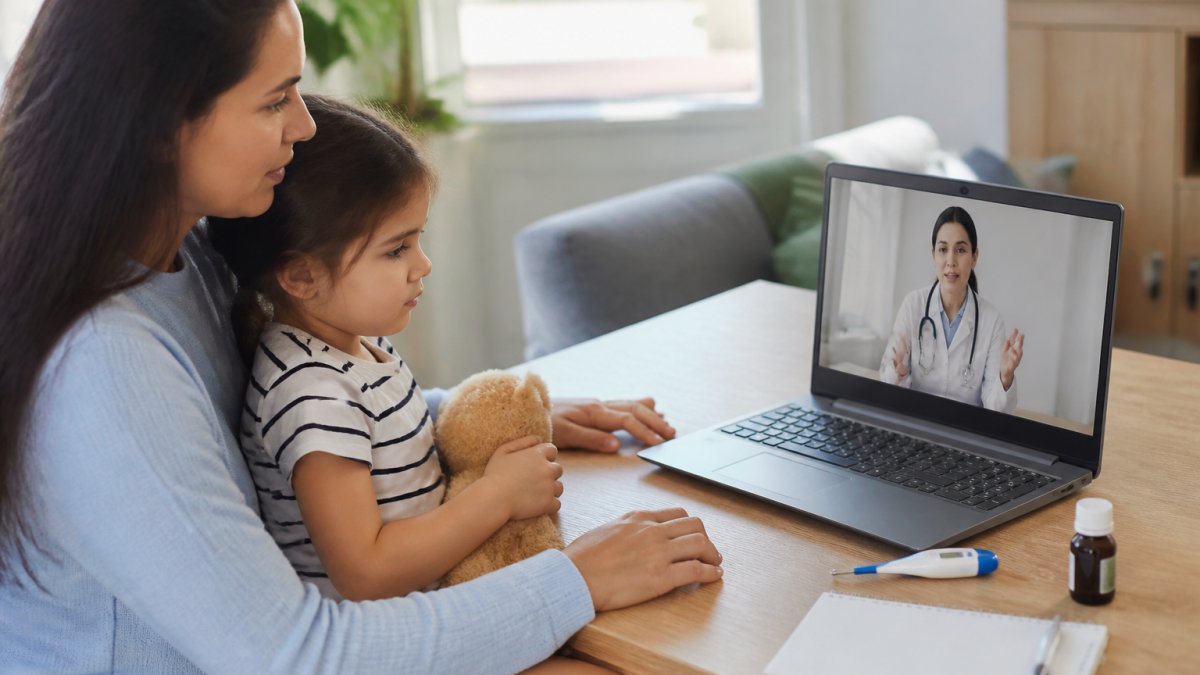
- Join the video consultation. The clinician reviews your symptoms, asks targeted questions, and performs a symptom assessment. Have your medication list and pharmacy name and address within reach.
- Receive your plan and e-prescription. If a prescription is appropriate, it is sent electronically to your pharmacy, usually within minutes of the visit ending. Ask the clinician to confirm the pharmacy address on file before the call ends.
- Pick up or arrange delivery. Most pharmacies process e-prescriptions within a few hours. Call ahead to confirm the prescription is ready and to ask about cost before you drive over.

What to do if the video connection fails
Technical problems are common and rarely cancel a visit. Most platforms build in fallbacks:
- Audio-only fallback. If video fails, many clinicians will continue by phone. Ask the platform before booking whether audio-only visits are permitted for your state, because some state rules require a video component for certain prescriptions.
- Reconnect and refresh. Close the app or browser tab, reconnect to Wi-Fi, and rejoin through the link in your confirmation email. A wired or stable connection beats a weak cellular signal.
- Call the platform's support line. Most telehealth services staff a support number during visit hours. Have your appointment confirmation number ready.
Can Telehealth Doctors Prescribe Antibiotics?
Yes, telehealth doctors can prescribe antibiotics, but only when the evidence supports it. Antibiotics treat bacterial infections, not viruses, and a responsible clinician will not hand them out for a cold (the CDC).
This is where many patients get frustrated. You feel awful, you want a pill, and the doctor says no.
Antibiotics are appropriate for things like strep throat, some urinary tract infections, and certain skin infections.
The CDC guidance on antibiotic prescribing is clear that overuse drives resistance, which makes future infections harder to treat.
Many platforms use a rapid test for strep before prescribing.
Online Doctor Controlled Substance Prescription: What to Know
Controlled substances face the tightest rules in virtual care, and the rules changed significantly in recent years. Understanding the federal framework, not just the vague warning that "state rules vary", is what separates a legitimate prescription from a legal risk.
The federal baseline: the Ryan Haight Act
The Ryan Haight Online Pharmacy Consumer Protection Act sets the national floor. In general, it requires an in-person medical evaluation before a clinician may prescribe a controlled substance via telemedicine.
During the COVID-19 public health emergency, the DEA allowed greater flexibility for telemedicine prescribing of controlled substances without a prior in-person visit. Those flexibilities have been extended and revised multiple times, and the current status depends on the most recent DEA rulemaking.
What this means by drug category
- Stimulants for ADHD. Some telehealth platforms prescribe stimulants, but typically only after verifying an existing diagnosis, reviewing prior treatment history, and confirming that state rules and the current federal posture allow it. Many require an in-person visit or a local referral for the initial prescription.
- Benzodiazepines for anxiety. These are Schedule IV and face similar restrictions. Some clinicians will manage stable patients remotely; new starts usually require more careful evaluation.
- Opioid pain medications. Remote prescribing is highly restricted. Most legitimate platforms will not initiate opioids through a video visit and will refer you to in-person care.
What a legitimate platform will do
- State clearly which controlled substances it will and will not handle
- Verify your identity before any prescription, often with a photo ID and a liveness check
- Check your prescription history through state prescription drug monitoring programs to prevent duplicate or unsafe use
- Confirm that an in-person evaluation exists or that a valid federal exception applies
Red flags
Never use a site that ships controlled substances after a questionnaire with no live consultation, that guarantees a specific drug before any assessment, or that operates without a visible state license and a verifiable clinician identity. Those operations are the target of DEA and state board enforcement, and the patient carries much of the legal and health risk.
Telehealth Prescription Refill: How to Renew Your Medication
Refills are one of the strongest use cases for virtual care.
Here is how to renew without a hitch:
- Request the refill before you run out, ideally with a week of doses left
- Have your pharmacy name and address ready
- Confirm the exact drug name, strength, and dose
- Note the date of your last visit and any recent test results
Some medications require periodic lab work or a blood pressure check. The clinician will tell you if a renewal needs updated results first. Skipping that step is how refills get delayed.
For chronic conditions like diabetes or hypertension, a follow-up visit every few months keeps the prescription valid and catches problems early.
When to Choose In-Person Care Instead
Virtual care is not right for everything, and knowing the line protects you. Skip the video visit and seek in-person care when any of these apply:
- Chest pain, shortness of breath, or signs of a stroke
- Severe abdominal pain or uncontrolled bleeding
- A high fever with confusion or a stiff neck
- A serious injury, broken bone, or deep wound
For these situations, call emergency services or go to the nearest emergency department. A virtual visit adds delay when minutes matter.
There is also a middle ground. Urgent care handles many problems that are too serious for a video call but not serious enough for the ER. If you are unsure, start with a telehealth triage conversation. A clinician can tell you where to go next.
Conclusion
The hard part of virtual care is not the technology. It is knowing which problems fit a video visit and which need a hands-on exam.
At Morris Medical Center, we built our practice around physician-led telehealth for Florida patients by phone or computer: primary care, preventive services, medical weight management and more.
If you are ready to skip the waiting room, get started with Morris Medical Center and book a visit that fits your schedule.
Frequently Asked Questions
Can an online doctor prescribe medication without an in-person visit?
Yes. Online doctors can prescribe medication without a prior in-person exam, provided the prescription is for a legitimate medical purpose and follows state and federal rules. The doctor must conduct a proper evaluation via video or phone, review your medical history, and make a clinical assessment. Some states have specific rules for controlled substances, but for most common medications, a virtual visit is sufficient.
What medications can online doctors prescribe?
Online doctors can prescribe most non-controlled medications, including antibiotics for common infections, refills for chronic conditions like diabetes or hypertension, birth control, and certain mental health medications. They cannot prescribe controlled substances (like opioids or stimulants) without meeting strict federal and state requirements, and they cannot prescribe medications that require in-person monitoring or specialized tests.
Can an online doctor send a prescription to my pharmacy?
Yes. After your consultation, the doctor can send an electronic prescription directly to the pharmacy of your choice. You'll need to provide the pharmacy's name and location during your visit. Most online platforms use secure e-prescribing systems that are HIPAA compliant, so your prescription reaches the pharmacy quickly and securely. Some pharmacies may require additional verification for certain medications.