 Comparison
Urgent Care vs Telemedicine for Rashes: Which to Choose
Last Updated: November 22, 2026
Quick Summary
Telemedicine for rashes works best when the rash is mild, visible, and easy to photograph in good light, while in-person urgent care wins when a provider needs to feel the skin's texture, check for warmth or swelling, or run a test. Choose virtual care for mild, non-spreading rashes and urgent care for fever, spreading, painful, or unclear rashes.
- Take rash photos in bright, indirect daylight and never use a camera flash.
- Include one wide shot, one close-up, and one from the side, plus a coin or ruler for scale.
- Seek in-person care when a rash spreads quickly, feels hot, or comes with fever.
- Call emergency services for a rash with difficulty breathing, facial swelling, or rapid body-wide spread.
- Confirm coverage, copay, and separate lab billing before booking either visit type.
Table of Contents
- Urgent Care vs Telemedicine for Rashes: The Core Trade-Off
- Common Rashes Treated by Telehealth
- How to Prepare Rash Photos for a Virtual Visit
- When to See a Doctor for a Rash in Person
- Urgent Care Rash Treatment Cost and Insurance Coverage
- When to Choose Which: A Decision Framework
- What Happens After an Inconclusive Virtual Assessment
- Book a Same-Day Virtual Visit for Your Rash
- Frequently Asked Questions
Urgent Care vs Telemedicine for Rashes: The Core Trade-Off
A red, itchy patch of skin rarely comes with a convenient appointment time.
Telemedicine for rashes works best when the skin problem is visible, mild, and easy to photograph in good light.
Below, we break down where each option fits, how to prepare for a virtual visit, and the warning signs that mean you should skip the phone screen entirely.
Speed, Cost, and Diagnostic Limits at a Glance
The table below summarizes how the two care settings compare on the factors patients ask about most.
| Factor | Telemedicine | In-person urgent care |
|---|---|---|
| Typical wait | Minutes to same day, from home | Varies by clinic; walk-in lines possible |
| Cost structure | Often lower visit fee; varies by insurance | Higher facility fee plus visit charge |
| Hands-on exam | Not possible | Provider can palpate, scope, and swab |
| Lab tests or imaging | Generally unavailable | Available on site or by referral |
| Best for | Mild, visible, non-spreading rashes | Fever, spreading, painful, or unclear rashes |
| After-hours access | Often available by phone or video | Limited to clinic hours |
Common Rashes Treated by Telehealth
Several everyday skin complaints are reasonable candidates for a virtual visit.
Eczema flares and mild acne also tend to photograph well, especially when the patient can describe itching, timing, and what has already been tried. A clinician can review the pattern, ask about triggers, and discuss treatment options during a video consultation.
Telehealth is not a guessing game. A provider can recognize when an image is not enough and recommend a physical examination.
Rash Features That Are Hard to Assess Remotely
Some rash characteristics simply do not translate through a camera. Texture is the big one. Whether a lesion is raised, flat, scaly, or weeping changes the diagnosis, and a photo flattens that information.
Other features that are difficult to assess remotely include:
- Warmth over the rash, which signals possible infection
- Deep tenderness that a provider would normally probe
- The exact size and firmness of a lump beneath the skin
If any of these describe your rash, say so during the visit. A good clinician will factor that limitation into the recommendation.
How to Prepare Rash Photos for a Virtual Visit
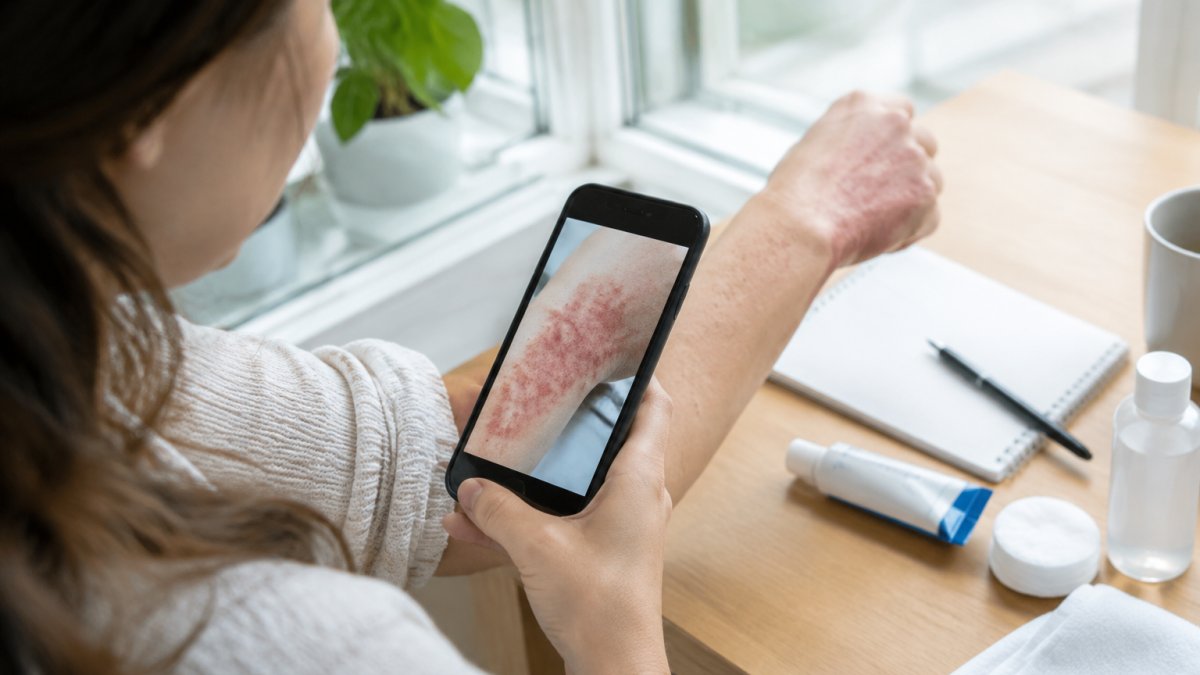
A virtual rash visit is only as good as the images the clinician receives. A handful of well-lit, well-labeled photos can help a remote assessment, because the provider can see distribution, color, and border sharpness directly. The goal is not a beautiful photo, it is a clinically useful one.
Lighting and focus
Take photos in bright, indirect daylight near a window, never with a camera flash. Flash washes out redness and creates glare that hides texture. Hold the phone steady or brace it on a surface so the rash stays in focus; a blurry close-up is worse than a wide shot because it hides the border of the lesion. If your phone has a macro or close-focus mode, use it for the tight shot and switch back for the wide shot.
Scale and multiple angles
Include one wide shot that shows where the rash sits on the body, an arm, the torso, the back of a knee, so the clinician can judge distribution. Then take one close-up that fills the frame with the affected skin. Place a common object next to the rash for scale, such as a coin or a ruler, so the provider can estimate size.
Documenting timing and change
Note when the rash first appeared and whether it has spread, faded, or changed color since. If you have older photos from earlier in the outbreak, bring them to the visit, clinicians use the trajectory as much as the current appearance. A rash that looked mild yesterday and is angry today tells a different story than one that has been stable for a week.
A practical checklist
- Clean the area gently and pat dry before photographing
- Use natural light and avoid shadows from your own hand
- Remove jewelry, watches, or clothing that covers the rash
The woman is American.
Watch out: photographing a rash in a dim room or with a flash can make a serious infection look mild and a mild irritation look severe, which can push the visit toward the wrong recommendation.
For a fuller walkthrough of what to have ready, see our guide on how to prepare for a telehealth appointment.
When to See a Doctor for a Rash in Person
Some rashes need a physical examination, and no amount of good photography changes that. Seek in-person care when a rash spreads quickly, feels hot to the touch, or comes with pus, blistering, or peeling skin.
Our guidance on which severe symptoms online doctors can treat can help you judge whether a virtual visit is appropriate or whether you should be seen in person.
Rash-Specific Emergency Warning Signs
A small number of rash presentations are emergencies. Call emergency services or go to the nearest emergency room if a rash appears with any of the following:
- Difficulty breathing, wheezing, or throat tightness
- Swelling of the lips, tongue, or face
- A rash that spreads rapidly across the body within minutes
These signs can point to a serious allergic reaction or a systemic infection, and they need hands-on emergency care, not a video call.
Urgent Care Rash Treatment Cost and Insurance Coverage
Cost is where the two options often diverge most. Telemedicine and in-person urgent care visits can carry different fees, and the amount you owe depends on your plan and the visit type. Insurance coverage varies widely, so the amount you owe depends on your plan, your deductible, and whether the visit is billed as primary or urgent care.
Before you book, confirm three things: whether the visit is covered, what your copay or coinsurance is, and whether a lab test would be billed separately. Our insurance, payments, and patient resources page explains coverage, self-pay options, and payment methods in more detail.
Watch out: assuming a virtual visit is always cheaper. If the rash turns out to need an exam or a test, you may pay for the virtual visit and the in-person follow-up.
When to Choose Which: A Decision Framework
Use this simple framework to decide where to start.
Choose telemedicine for rashes if:
- The rash is mild, visible, and easy to photograph
- You have no fever, spreading, or severe pain
- You want same-day guidance from home
Choose in-person urgent care if:
- The rash is spreading quickly, hot, or painful
- You have fever or feel generally unwell
- The rash involves the eyes, mouth, or genitals
If you are weighing virtual care against a clinic visit in more depth, our article on whether you can get rash treatment online walks through the same decision from the patient's side.
What Happens After an Inconclusive Virtual Assessment
Not every virtual visit ends with a firm answer, and that is not a failure of the visit, it is a normal part of rash evaluation. Rashes are visual and tactile at the same time, and a photo can only carry so much. The useful question is not whether the visit was inconclusive but what the next step is, and a good clinician will make that explicit before the call ends.
The three common next steps
When an image is unclear or the history points in several directions, the clinician typically recommends one of three paths:
- In-person examination. The provider asks you to be seen at an urgent care or clinic so the rash can be palpated, measured, and examined under better light. This is common when texture, warmth, or tenderness matters to the diagnosis.
- Testing. A skin swab, scraping, or blood test may be ordered if an infection or systemic cause is suspected. These are generally not available through a video visit and require an in-person stop.
- Watchful waiting with a scheduled follow-up. For mild, stable rashes, the clinician may recommend a short observation period with a follow-up visit or photo check-in, plus clear instructions on what would change the plan.
What you should leave the call knowing
Before the visit ends, confirm four things: what the working diagnosis is, what the next step is, what symptoms would mean you should escalate sooner, and whether a follow-up is already scheduled. If you do not have those answers, ask for them. A virtual visit that ends with "see how it goes" and no escalation threshold is not a complete visit.
When to skip the follow-up and escalate now
If your symptoms worsen before the scheduled follow-up, rapid spread, new fever, blistering, severe pain, or any of the emergency warning signs above, seek in-person or emergency care rather than waiting for the next appointment.
Watch out: treating an inconclusive virtual visit as a final answer. If the rash is not improving on the recommended plan, or if you were told an exam was needed and you have not yet been seen, the next step is in-person care, not another video call.
Book a Same-Day Virtual Visit for Your Rash
Deciding between urgent care and telemedicine for a rash gets easier once you know what your skin actually needs. If your rash is mild, visible, and free of warning signs, a virtual visit can save you a trip and get you answers the same day.
Book a same-day virtual appointment and get your rash looked at without leaving home.
If a rash has you unsure where to turn, start with a conversation instead of a waiting room.
Frequently Asked Questions
Can you do a telehealth visit for a rash?
Yes, many rashes can be assessed through telemedicine for rashes when the rash is clearly visible on camera and you have no signs of serious illness. Mild hives, fungal infections, contact dermatitis, and acne-like eruptions are typical examples. A provider reviews your photos or video, asks about itch, timing, and exposures, and can prescribe treatment when appropriate. Rashes that are spreading fast, painful, oozing, or paired with fever usually need an in-person exam instead.
Is it worth going to urgent care for a rash?
Urgent care is worth it when a rash needs a hands-on assessment: it is spreading quickly, feels hot or painful, has blisters or pus, or comes with fever or swelling. In-person visits allow a physical examination, testing, and same-day treatment that a virtual visit cannot provide. For a mild, stable rash, a virtual visit is usually faster and cheaper. If you are unsure, start with a telehealth consultation and let the provider tell you whether you need to be seen in person.
What types of rashes can be diagnosed via telemedicine?
Telehealth works best for rashes that photograph clearly and have no systemic symptoms. Common examples include mild hives, fungal infections like ringworm, contact dermatitis, eczema flares, and minor acne. Providers can often diagnose these from good images plus your history. Rashes that are difficult to assess remotely include those inside the mouth, under hair, in skin folds, or that change quickly. A virtual provider will escalate to in-person care if the images are unclear or the symptoms suggest something more serious.
Does insurance cover telehealth for skin conditions?
Many insurance plans cover telehealth visits for skin conditions, but coverage varies by plan and provider. Check whether your plan includes virtual care, what your copay is, and whether the visit counts toward your deductible. Confirm current pricing with the specific practice before you book.
What should I do if a virtual visit does not give a clear answer?
If a virtual assessment is inconclusive, the provider will typically recommend an in-person exam, possibly with testing or imaging, at an urgent care center or your primary care office. Ask what specific features they want checked, whether you need to avoid creams before the visit, and how soon you should be seen. Follow up within 24 to 48 hours if the rash worsens or new symptoms appear. An inconclusive virtual visit is not a wasted visit; it narrows the next step.